
Kartik Purnima 2026 | কার্তিক পূর্ণিমা ২০২৬
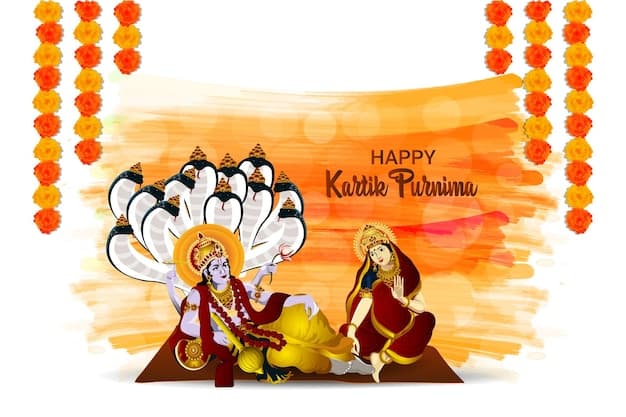
Kartik Purnima 2026 — 84 Varanasi ghats lit with diyas on Dev Diwali night, Akash Pradeep on rooftops in Bengal

About Kartik Purnima(উৎসব পরিচিতি)

Kartik Purnima 2026 falls on Tuesday, November 24 — the full moon night of the month of Kartik, one of the most cosmologically and spiritually significant full moons in the Hindu calendar.

Three major traditions converge on this night, independently sacred to three different communities:

For Hindus — Kartik Purnima is Tripuri Purnima (the night Shiva defeated the demon Tripurasura), Dev Diwali (the festival of lights celebrated by the gods themselves), and the conclusion of the holy month of Kartik. In Varanasi, all 84 ghats on the Ganges are lit with over one hundred thousand diyas, visible from the river as a river of light.

For Sikhs — this is Guru Nanak Jayanti (Gurpurab), the birthday of Guru Nanak Dev Ji, founder of Sikhism. Gurdwaras worldwide illuminate the night with lights and serve Langar continuously.

For Odisha and coastal Bengal — this is Boita Bandana, the ancient maritime tradition of floating miniature boats (boita) made of banana stems on rivers and ponds to commemorate the historic seafaring merchants of ancient Odisha (Sadhabas) who set sail for Bali and Southeast Asia on this night each year.

The same full moon carries all three observances — separately rooted, overlapping in their shared recognition that this particular night deserves to be lit.

History: The mythological anchor of Kartik Purnima in Hindu tradition is the story of Tripurasura — a demon king who had built three invincible cities (Tripura) in the sky, on the earth, and below the earth. The three cities could only be destroyed simultaneously, and only by a single arrow fired at the precise moment they aligned. Lord Shiva waited for this alignment, fired the arrow, and destroyed all three cities in one shot on the Purnima of Kartik. This is why Kartik Purnima is also called Tripuri Purnima or Tripurari Purnima (Tripurari being one of Shiva's names — destroyer of Tripura).

In the Vaishnava tradition, this night is also significant as the day Vishnu, freshly awakened from his Chaturmas sleep (having been welcomed back by the Devuthana Ekadashi eleven days earlier), is in full active presence. The lamps lit on this night are an offering to his returned wakefulness.

The Dev Diwali tradition of Varanasi has its own distinct story: after Shiva destroyed Tripurasura, the gods (Devas) descended to earth to celebrate on the banks of the Ganges, lighting lamps in Shiva's honour. The Varanasi ghats on Kartik Purnima have been recreating this divine celebration for centuries.

Boita Bandana — the Odishan boat-floating tradition — connects to a time when the Sadhabas (Odia maritime merchants) would set sail on the Kartik Purnima tide for Bali, Java, Sumatra, and the spice islands of Southeast Asia. Their wives and families would float small lamps on the water to light their way. The tradition has been maintained as a folk observance long after the merchant voyages ended — a cultural memory encoded as ritual.

Significance: Kartik Purnima is observed across India and in different forms that are all worth understanding:

Varanasi (Dev Diwali) — the most spectacular expression. All 84 Ganges ghats are illuminated with over 100,000 earthen lamps. Boat processions carry priests who perform evening Arati simultaneously on the river. The sight of the lit ghats reflected in the Ganges on this night has no equivalent anywhere in India.

Bengal (Akash Pradeep and river lamps) — in Bengali tradition, Akash Pradeep — a lamp raised on a tall bamboo pole and placed on rooftops — is lit on Kartik Purnima evening to guide the souls of ancestors. River bathing before dawn is widespread. Many temples hold Kartik Purnima Mela (fairs) through the night.

Odisha (Boita Bandana) — before dawn on Kartik Purnima, Odias across the state go to rivers, ponds, tanks, and even water-filled pots if no water body is nearby, and float small banana-stem boats with lamps, coins, and areca nuts. The chant recited is: *Aa ka ma boi, pana gua thoi* — *'Come, my boat, take your areca nut and go.'* The practice is maintained with the same emotional investment as a living tradition, not a museum piece.

For Sikhs (Gurpurab) — the same night, Gurdwaras across the world are illuminated and Langar runs continuously to celebrate Guru Nanak's birth in 1469. The coincidence of the sacred Hindu Purnima and the Sikh Gurpurab on the same night is taken as a mark of the night's singular sanctity.

Rituals & How to Celebrate

Pre-dawn Snan (holy bath) — bathing in a sacred river before sunrise on Kartik Purnima morning. Believed to be as meritorious as bathing at all pilgrimage sites simultaneously on this specific Tithi. Rivers across India draw large crowds before dawn.
Akash Pradeep (sky lamp) — in Bengal, a tall bamboo pole is set up on the rooftop with a lit lamp at the top at dusk. The lamp guides ancestral souls. This is one of the most visually distinctive Bengali observances of the night.
River and lake lamp floating — diyas placed on leaf cups or clay saucers are floated on rivers and ponds at dusk. The lamps drift with the current. On large rivers, the sight of hundreds of small floating flames is something people return to the ghat specifically to witness.
Boita Bandana (Odisha and coastal Bengal) — small banana-stem boats with lamps, coins, and areca nuts are floated before dawn on rivers and ponds. The ancient Odishan maritime tradition remembered in miniature.
Tulsi Vivah conclusion — the Tulsi Vivah observance during Kartik month reaches its culmination around this period. Some families perform a final Tulsi puja on Kartik Purnima.
Temple fairs and Kartik Purnima Mela — in many towns across Bengal, Jharkhand, and Odisha, large annual fairs (Mela) are held on Kartik Purnima night. Rides, stalls, performances, and communal gathering around the lit temple complex.
Dev Diwali Arati in Varanasi — if you are in or near Varanasi on this night, the simultaneous Ganga Arati performed by priests on boats at all 84 ghats, with the lit ghats as backdrop, is one of the largest ritual spectacles in India.

Traditional Foods & Bhog

Kheer and Payesh — rice pudding is the most common sweet offering on full moon nights across India. On Kartik Purnima, it is offered at temples and shared at home after the evening rituals.Malpua — a fried sweet pancake offered at Vishnu temples during Kartik observances. Often soaked in sugar syrup and served warm.Chirer Khoi (puffed rice mix) — made from puffed rice, coconut, molasses, and seasonal fruits. A traditional Bengali offering for full moon occasions and distributed as prasad.Naru (coconut laddoo) — coconut-jaggery laddoos made at home and offered at the Tulsi plant and distributed between households.Seasonal fruits — amla (Indian gooseberry), guava, banana, and mandarin — offered as prasad at river-side rituals and distributed after the morning Snan.Langar food at Gurdwaras — on the same night, Gurdwaras serve Langar continuously for Guru Nanak Jayanti. Kada Prasad, dal, roti, and kheer are available to all.

Festival Calendar

Nov24

Kartik Purnima

অগ্রহায়ণকার্তিক পূর্ণিমা ২০২৬

Tue

Frequently Asked Questions

Quick Info

FestivalKartik Purnima
Date
DayThursday
Tithiত্রয়োদশী
Bangla Date১৭ পৌষ ১৪৩২
Pakshaশুক্লপক্ষ

Panjika Details

Sunrise6:30 AM
Sunset5:20 PM
Nakshatraবিশাখা
Yogaপ্রীতি
Karanaনাগ
Kartik Purnima 2026: Date (Nov 24), Dev Diwali Varanasi, Boita Bandana & Akash Pradeep