
Raksha Bandhan 2026 | রাখিবন্ধন ২০২৬
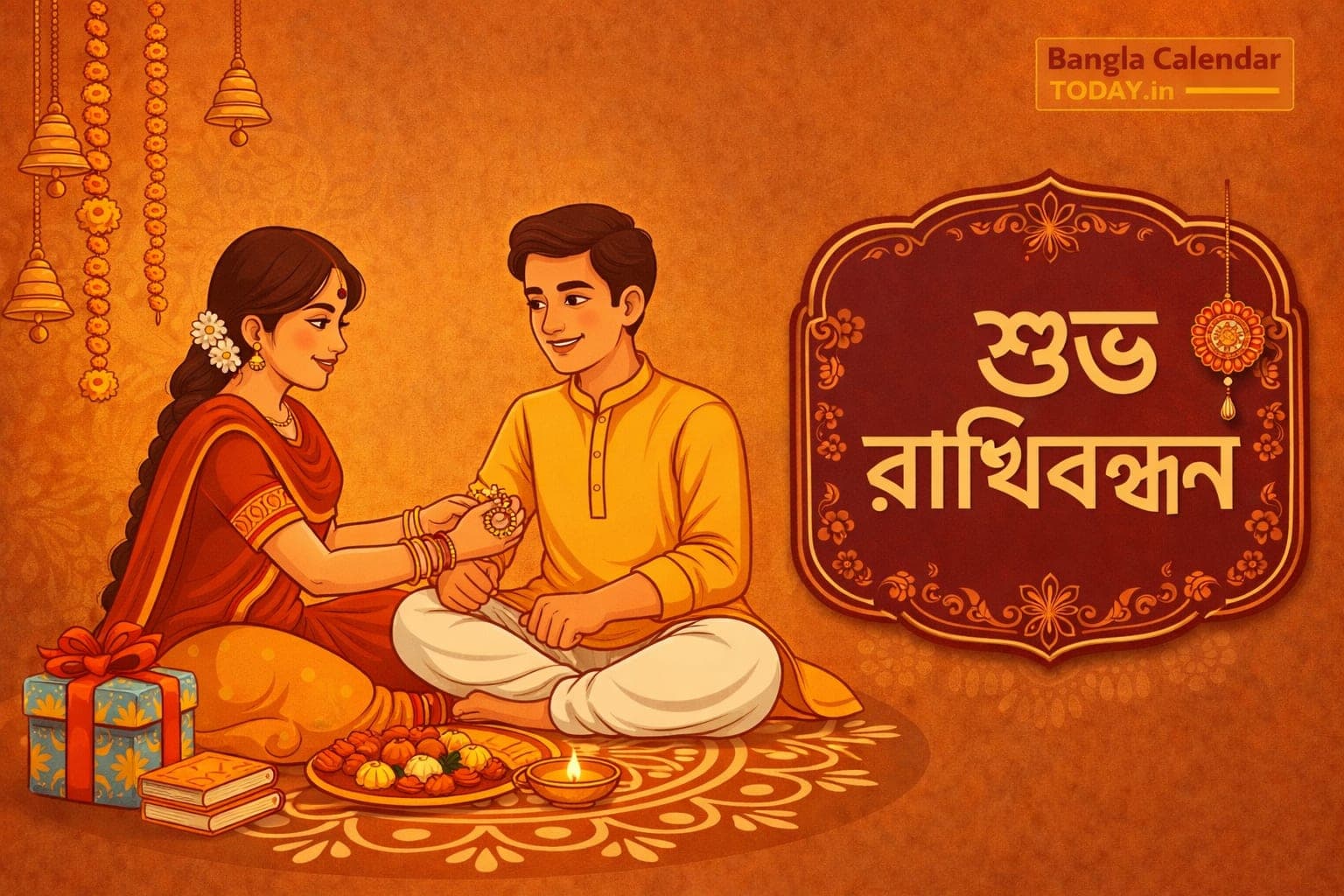
About Raksha Bandhan(উৎসব পরিচিতি)
But in Bengal, Raksha Bandhan carries a second story — one that began not at home but on the streets of Kolkata in 1905, and involves Rabindranath Tagore, a political crisis, and the remarkable idea that a cotton thread could hold a divided people together.
Raksha Bandhan 2026 is also observed on the same day as Shravan Purnima — the full moon night of the month of Shravan — and coincides this year with a partial lunar eclipse (Chandra Grahan), which traditionally influences the auspicious timing window for tying the Rakhi. The Bhadra period (an inauspicious time during the day) must be avoided; the Rakhi should ideally be tied after the Bhadra ends in the afternoon.
Rabindranath Tagore's response was not a speech or a pamphlet. It was a festival.
He took Raksha Bandhan — already a day of tying threads between siblings — and turned it into something entirely different. On October 16, 1905 (the day the Partition officially came into effect), Tagore walked through the streets of Kolkata tying Rakhis on the wrists of Hindus and Muslims alike. He called it a gesture of 'Sampriti' — unity, solidarity, the refusal to be divided. People joined him. By the end of the day, thousands of threads had been tied between people who shared no blood relation but a city, a language, and an anger at what was being done to their home.
This tradition — sometimes called Rakhi Utsav — became one of the most quietly powerful acts of protest in Bengali history. The Partition of Bengal was eventually reversed in 1911. The Rakhi remained.
The older mythological story of Raksha Bandhan also deserves mention. In Hindu tradition, the thread's protective power goes all the way back to a story in the Bhagavata Purana, where the goddess Indrani tied a protective thread on the wrist of Indra before a battle with the asuras. There are also stories of Draupadi tearing a strip from her sari to bind Krishna's bleeding finger, and of Lakshmi tying a Rakhi on Mahabali in exchange for Vishnu's return. The thread has always meant more than it looks.
The Bhadra period — considered inauspicious for Rakhi tying — typically falls in the morning and early afternoon of Raksha Bandhan. In 2026, the Bhadra is expected to end in the afternoon, after which the window opens for the Rakhi ceremony. Most panjikas recommend performing the ritual after the Bhadra ends and before the Grahan period begins.
For West Bengal specifically, Raksha Bandhan is observed as a public holiday. Schools, government offices, and most banks remain closed. It tends to be a full family day — morning ceremonies at home, an afternoon of visiting relatives, and an evening that inevitably involves large meals and even larger sweet boxes.
Rituals & How to Celebrate
Traditional Foods & Bhog
Festival Calendar
Raksha Bandhan
১৩ ভাদ্র • রাখিবন্ধন ২০২৬