Durga Puja 2026 | দুর্গাপূজা ২০২৬

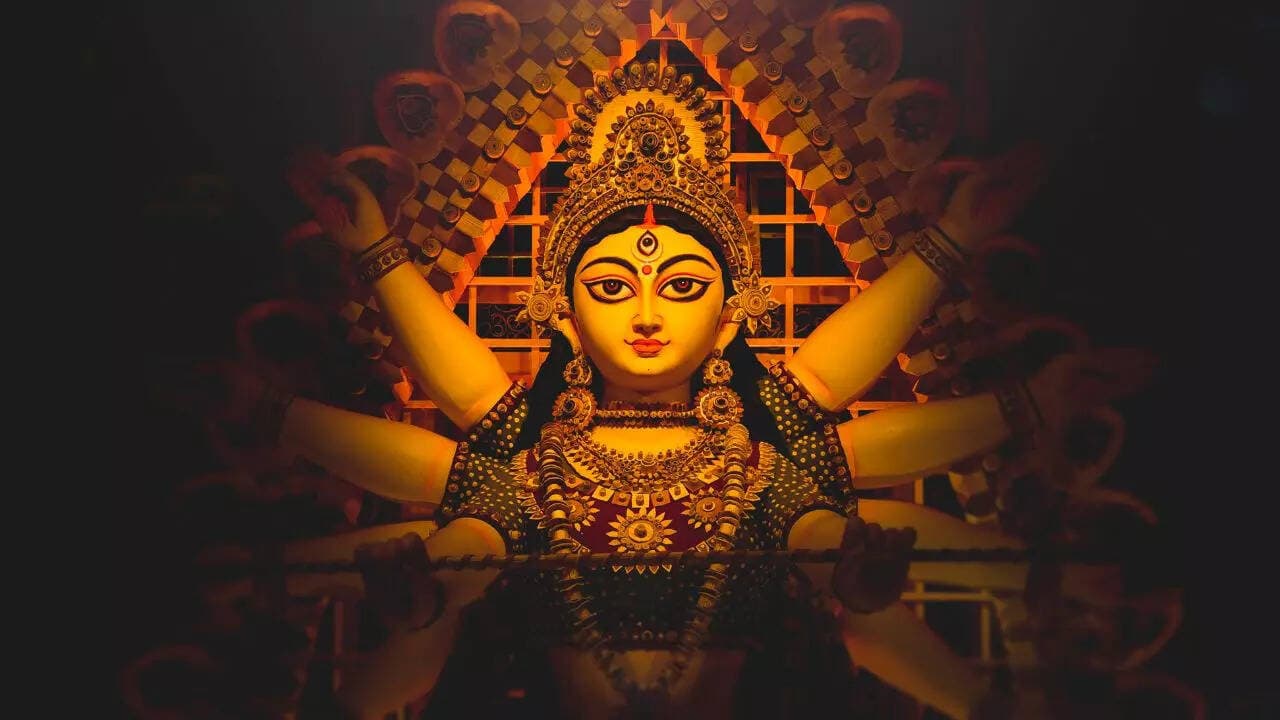
Durga Puja 2026 — Maa Durga idol in a Kolkata pandal with Dhaak players and devotees offering Pushpanjali

Looking for calendar views and tithis?

Read more about the exact tithi timings and planetary alignments in our comprehensive October 2026 Calendar.

View October Calendar →

About Durga Puja(উৎসব পরিচিতি)

Durga Puja 2026 begins with Maha Shashthi on Saturday, October 17, and concludes with Vijayadashami on Tuesday, October 20.

If you need to explain what Durga Puja is to someone who didn't grow up Bengali, the closest thing is this: imagine Christmas, Carnival, an international art festival, a family reunion, and the most important religious observance of the year — all compressed into five days and happening simultaneously on every street corner of a city of fifteen million people. That is roughly the scale and emotional intensity of Durga Puja in Kolkata.

But the description still misses something. Durga Puja is, before anything else, about homecoming. Maa Durga — our Uma, Gauri, the daughter of Bengal's mountains — comes home to her parents' house once a year. She brings her children: Lakshmi, Saraswati, Kartik, and Ganesha. For five days she is here. On the fifth day she leaves, returning to Kailash and to Shiva. And we stand at the river and watch the idol go under and feel something that is not quite grief but is not not grief either.

Around this simple emotional core — a daughter's annual homecoming — Bengal has built the most extraordinary festival in the world.

History: The earliest formal Durga Puja celebrations are traced to wealthy zamindar households of Bengal in the 16th and 17th centuries. The Sabarna Roy Choudhury family in Barisha, Kolkata, claims to have been performing Durga Puja since 1610. Many old aristocratic families — the Tagores of Jorasanko, the Mittras of Shyambazar — held elaborate Durga Pujas that were simultaneously religious observances and displays of social status. The public was often invited to watch, but the puja itself was private.

The shift toward community celebration happened in 1910, when a group of twelve friends in Guptipara, Hooghly, pooled money to organise a 'Barowari' puja — baro meaning twelve, yari meaning friends. This was the model for what we now call the Sarbojanin (universal, for all) Durga Puja: a celebration that belongs to the neighbourhood, funded collectively, open to everyone regardless of caste or wealth.

The Sarbojanin model spread rapidly through Bengal in the 1920s and 30s. By independence it was the dominant form. The competitive element — each para's puja trying to outdo the others in scale, creativity, and spectacle — emerged naturally and has never stopped escalating.

In 2021, UNESCO inscribed 'Durga Puja in Kolkata' on the Representative List of Intangible Cultural Heritage of Humanity. The inscription recognised not just the religious observance but the entire ecosystem around it: the artisans of Kumartuli who make the idols, the Dhaak players from Bishnupur who travel to Kolkata each year, the thousands of craftsmen who build the themed pandals, the communities that gather regardless of religion. When UNESCO said Durga Puja was a cultural heritage of humanity, they were describing something that has genuinely earned that description.

Significance: The five days of Durga Puja each carry their own distinct ritual character.

Maha Shashthi (October 17) — The Goddess arrives. Bodhon (awakening) ceremony is performed at dusk. The banana tree (Kola Bou) is installed as Shiva's second wife and kept near the main idol. The face of the Goddess is unveiled for the first time. For many Bengali families, Shashthi evening is when the Puja truly begins — the first time you see the idol and the pandal together, with the lights and the Dhaak.

Maha Saptami (October 18) — The Navapatrika ritual, popularly called Kola Bou snan (the banana tree's bath). Nine plants are tied in a sari, taken to a pond or river at dawn, bathed, and brought back to sit beside Ganesha. This represents the nine forms of Durga. Pushpanjali (flower offering) begins.

Maha Ashtami (October 19) — The most sacred day. Pushpanjali is performed three times. Kumari Puja — the worship of a young girl (usually between 6 and 12) as a living embodiment of the Goddess — is performed in many temples, most famously at the Belur Math. Sandhi Puja happens at the exact 48-minute juncture between Ashtami and Navami.

Sandhi Puja — 108 lamps and 108 lotus flowers are offered at the moment when Ashtami ends and Navami begins. This is the most intense ritual of the entire Puja — the moment when Durga took the Chamunda form to kill the demons Chanda and Munda simultaneously. The drumming is continuous, the smoke from 108 dhunuchi is dense, and the air in the pandal becomes something you don't forget.

Maha Navami (October 19, evening) — The Navami bhog — the largest communal meal of the Puja — is distributed. Hom (fire ritual) is performed. The mood shifts slightly: the Goddess is leaving tomorrow.

Vijayadashami (October 20) — Sindoor Khela in the morning, Bisarjan (immersion) in the afternoon and evening. This is the day that breaks a particular kind of heart. The idol that has been the centre of the neighbourhood's universe for five days is taken to the river. As it goes under, the tradition is to say: 'Asche bochhor abar hobe' — it will happen again next year.

Rituals & How to Celebrate

Bodhon (Shashthi evening) — the formal awakening and invitation of the Goddess, performed under a bel (wood apple) tree. The idol's face is unveiled. The Puja has officially begun.
Navapatrika Snan (Saptami dawn) — nine plants representing nine forms of Durga are bathed in a river or pond before sunrise and installed beside the main idol. This is performed while the rest of the city is asleep, by the pujari and a small group of devotees.
Pushpanjali — the offering of flowers (typically Bel leaves, red hibiscus, and marigolds) held in both hands while the priest recites Sanskrit shlokas. Devotees repeat after him. Performed on Saptami, Ashtami, and Navami.
Kumari Puja (Ashtami) — a young girl is bathed, dressed in red and white, given the attributes of the Goddess, and worshipped as a living Devi. The Belur Math Kumari Puja is the most famous in Bengal. It was started by Swami Vivekananda in 1901.
Sandhi Puja (the juncture of Ashtami-Navami) — 108 diyas and 108 lotus flowers are offered over 48 minutes. The drumming is uninterrupted. The smoke from clay dhunuchi fills the pandal. This is the moment of the Puja that people feel in their chest.
Dhunuchi Naach — dancing with clay pots of burning coconut husk and camphor, balanced on the palms or held in the mouth, to the beat of the Dhaak. Done before the idol, especially on Ashtami and Navami evenings.
Anjali and Bhog — the communal prasad, particularly the Bhoger Khichuri (lentil rice cooked with vegetables), distributed free to everyone who comes to the pandal. Some of Kolkata's largest pujas serve lunch to tens of thousands of people.
Sindoor Khela (Dashami morning) — married women offer sindoor (vermilion) to the Goddess and then to each other. The scene — red powder on white saris, on faces, on the idol's feet — is one of Bengal's most distinctive images.
Bisarjan (Dashami afternoon/evening) — the procession to the river. The Goddess is carried on shoulders to the ghat. The immersion itself takes only a moment. The sound the idol makes entering the water, and the crowd's response to it, is something no description fully captures.

Traditional Foods & Bhog

Bhoger Khichuri — the soul of Durga Puja eating. A thick, fragrant yellow lentil-rice cooked with ghee and whole spices, served with Labra (mixed vegetable curry) and a list of accompaniments that varies by puja committee. The Khichuri at a good Kolkata puja pandal is cooked in enormous clay pots over wood fire and tastes like nothing you can make at home.Labra — the accompanying mixed vegetable dish, made with whatever seasonal produce is available: potato, pumpkin, radish, yam, banana flower. Slightly sweet, slightly spiced, cooked together until everything softens into one.Luchi and Cholar Dal — the home celebration meal, especially on Shashthi and Saptami when families cook properly before the pandal-hopping takes over. White puffed fried bread with thick split-pea curry with coconut and spices.Beguni — batter-fried brinjal slices, eaten as a side with khichuri or bought hot from street stalls outside the pandal.Phuchka — the Kolkata version of pani puri, eaten on the street outside pandals, is as much a part of Durga Puja as the Pushpanjali. There is something specific about eating phuchka at 11 PM outside a lit pandal that belongs entirely to this festival.Egg Roll and Chicken Roll — the Kolkata roll from Nizam's and a hundred imitators: a thin layered paratha wrapped around egg and/or chicken with onion and green chutney. The default pandal-hopping food of North Kolkata.Rosogolla, Sandesh, Mishti Doi — the sweet table of Durga Puja is long. Sweet shops in Kolkata receive most of their annual revenue in these five days. No family leaves a relative's home without a sweet box.Payesh — made at home on Ashtami or Navami as a pure offering to the Goddess, then shared within the family. The rice pudding of Durga Puja is an occasion in itself.

Festival Calendar

Oct17

Maha Sasthi 2026 (Durga Sasthi)

কার্তিকমহা ষষ্ঠী

Sat
Oct18

Maha Saptami 2026 (Durga Saptami)

কার্তিকমহা সপ্তমী

Sun
Oct19

Maha Ashtami 2026 (Durga Ashtami)

কার্তিকমহা অষ্টমী

Mon
Oct19

Maha Navami 2026 (Durga Navami)

কার্তিকমহা নবমী

Mon
Oct20

Vijaya Dashami 2026 (Dussehra)

কার্তিকবিজয়া দশমী

Tue

Frequently Asked Questions

Quick Info

FestivalDurga Puja
Date17 October 2026
DaySaturday
Tithiদ্বিতীয়া
Bangla Date১ কার্তিক ১৪৩২
Pakshaশুক্লপক্ষ

Panjika Details

Sunrise5:50 AM
Sunset5:15 PM
Nakshatraপুষ্যা
Yogaসিদ্ধ
Karanaগর
Durga Puja 2026: Dates, Sandhi Puja Time, Rituals, UNESCO Heritage & Bengal Guide