
Maha Sasthi 2026 (Durga Sasthi) | মহা ষষ্ঠী ২০২৬
Looking for calendar views and tithis?
Read more about the exact tithi timings and planetary alignments in our comprehensive October 2026 Calendar.
About Maha Sasthi (Durga Sasthi)(উৎসব পরিচিতি)
Not because of what happens liturgically. The puja rituals of Shashthi are relatively restrained compared to Ashtami's Pushpanjali or Dashami's Bisarjan. What makes Shashthi singular is the arrival. The moment the Dhaak starts — properly, not just rehearsing, but the full ceremonial beat that means it has begun — something in your chest does something you've been waiting twelve months to feel.
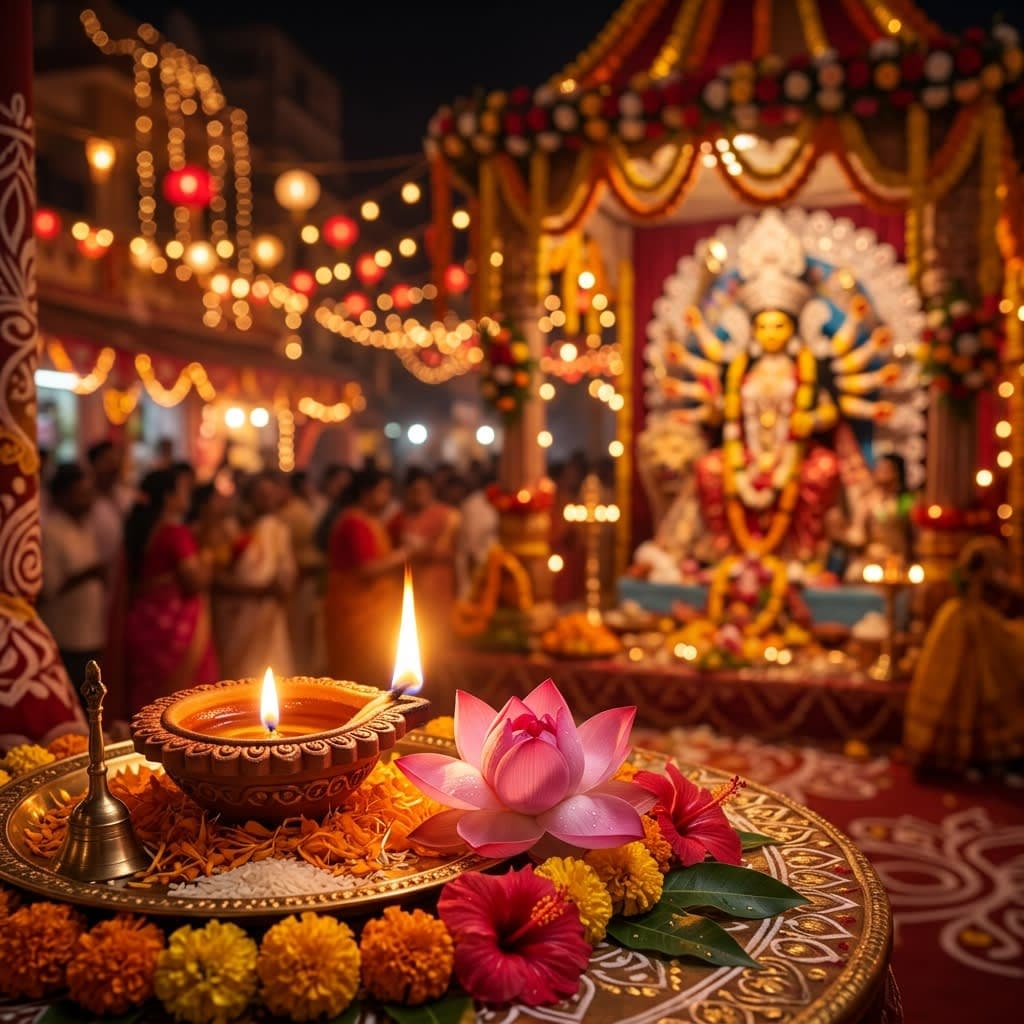
Shashthi is when the Goddess is formally awakened (Bodhon) and invited into her seat for the next five days. The idol has been in the pandal for days already — the committee has been working on it for weeks. But until Bodhon, the idol is clay and art. From Bodhon onwards it is the Goddess. That distinction is real in the way that it matters to the people for whom it matters.
For families with members scattered across cities or countries, Shashthi is often when everyone actually arrives home. The train was booked in July. The flight was booked in June. The hotel in Kolkata where the out-of-town relatives always stay has been full for a month. Shashthi is when the family is whole again.
In the original tradition, Durga was worshipped in spring (Basanta) and the autumn months were when the gods rested in Devashayana — the divine sleep. When Rama needed the Goddess's blessing before his battle against Ravana to rescue Sita, he invoked her in autumn, against convention. Brahma appeared and instructed Rama to worship Durga, but because the timing was unorthodox — the gods sleeping, the season wrong — it was called Akal Bodhon. The awakening out of season.
Rama won his battle. And the autumn Durga Puja, anchored by this story, became the primary form of the festival — larger and more elaborate than the original spring celebration, which is still observed in some places as Basanti Puja but is vastly overshadowed.
The Shashthi rituals specifically are connected to Goddess Sasthi — a separate, ancient mother goddess of Bengali folk tradition, protector of children and overseer of childbirth. The Shashthi Brata observed by mothers on this day — a daytime fast praying for children's health and longevity — comes from this older tradition and has been absorbed into the Durga Puja calendar.
The formal beginning of the Durga Puja puja sequence on Shashthi — Kalparambha in the morning, Bodhon and Amantran in the evening — was standardised by Sanskrit texts and community practice over centuries. Today it is followed with near-identical structure across every puja committee in Bengal.
The morning is relatively quiet. Kalparambha — the formal initiation of the puja by the priest — happens before sunrise and is attended by the puja committee members and a small group of devotees. The neighbourhood is still asleep. The priest does his work. The day begins officially, even if the city hasn't noticed yet.
By afternoon, Kolkata is in motion. The pandals fill. New clothes appear on children. The sweet shop queues lengthen. The first evening of proper Dhaak playing begins in the larger pujas.
Shashthi evening is Bodhon. Beneath a bel (wood apple) tree — or a branch of one, since not every pandal has a tree — the priest performs the ceremony that invokes the Goddess's spirit into her idol. Conch shells blow. The ulu-dhwani (the high, ululating sound women make with their tongues at auspicious moments) fills the air. The curtain in front of the idol is pulled back for the first time. And there she is.
For a child at their first proper Durga Puja, this moment is overwhelming. For an adult who has seen it forty times, it is still something.
Rituals & How to Celebrate
Traditional Foods & Bhog
Festival Calendar
Maha Shashthi
১ কার্তিক • মহা ষষ্ঠী