
Ganesh Chaturthi 2026 | গণেশ চতুর্থী ২০২৬
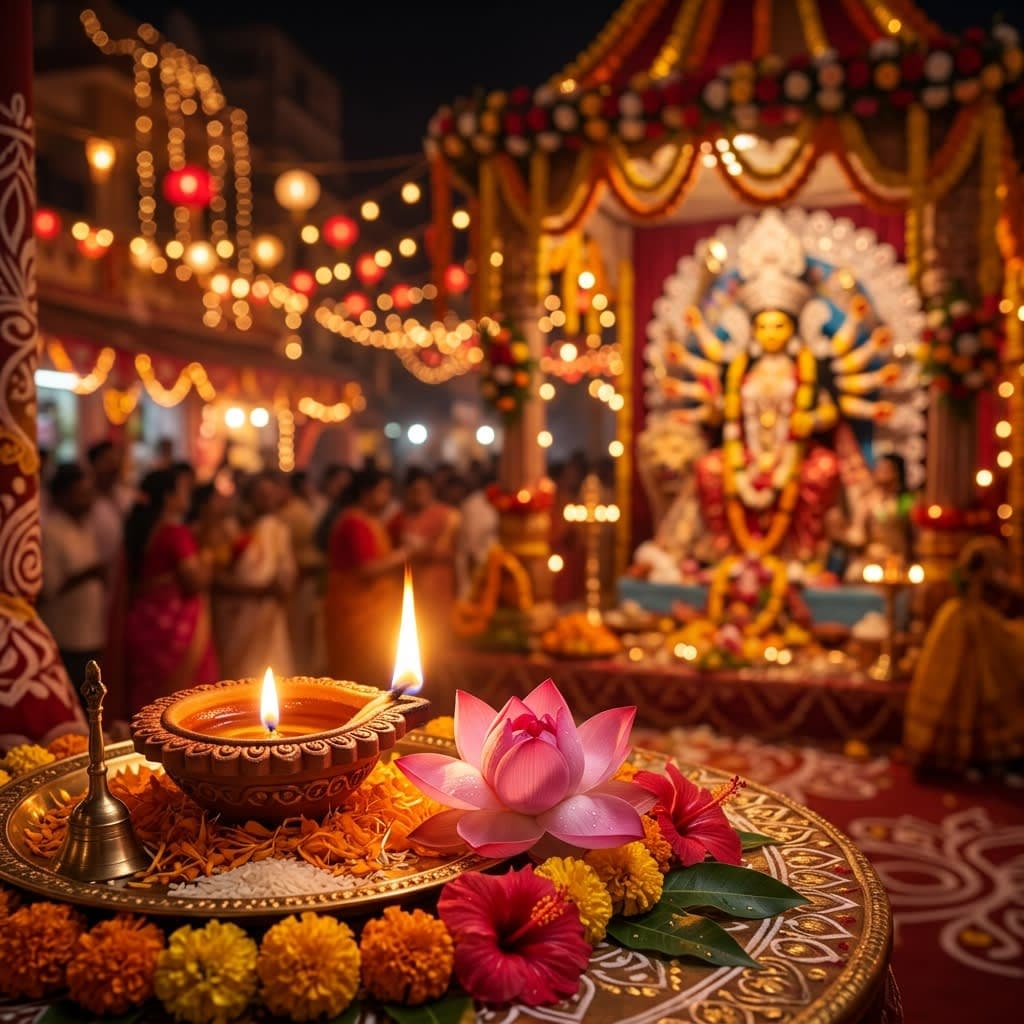
Ganesh Chaturthi 2026 — clay Ganesha idol decorated with flowers and Modak offerings for puja

Looking for calendar views and tithis?

Read more about the exact tithi timings and planetary alignments in our comprehensive September 2026 Calendar.

View September Calendar →

About Ganesh Chaturthi(উৎসব পরিচিতি)

Ganesh Chaturthi 2026 falls on Monday, September 14. It marks the birth anniversary of Lord Ganesha — the elephant-headed son of Shiva and Parvati, the deity you invoke before starting anything: a new business, a puja, a journey, an exam, a house. No other god in the Hindu pantheon holds this specific position. Ganesha goes first. Always.

In Bengal, the relationship with Ganesha is old and familiar. He is not a guest deity who arrives once a year like Durga — he is a permanent resident of the household altar, the one whose small brass or clay idol sits in the corner and gets a daily flower and a quick prayer before the bigger rituals begin. Bengali families call him Ganesh Thakur. The tone is affectionate, not distant.

As a public festival on the scale of Maharashtra's Ganapati celebrations — ten-day pandals, massive processions, lakhs of visitors — Ganesh Chaturthi is relatively new in Bengal. But it has been growing steadily, particularly in Kolkata and Howrah, over the last fifteen years. In 2026, Ganesh Chaturthi falls on a Monday, and with Visarjan (idol immersion) traditionally on the 10th day, Anant Chaturdashi arrives on September 23.

History: The festival as a large-scale public event was essentially invented by Bal Gangadhar Tilak — Lokmanya Tilak — in Pune in 1893. Before Tilak, Ganesh Chaturthi was largely a private household affair across much of India. Tilak recognised that a beloved, universally appealing deity like Ganesha could serve as a social glue — a reason for people of different castes and backgrounds to gather together under British colonial rule, building community solidarity through shared worship. He organised the first large public Ganesh festival in Pune with the explicit goal of creating a space for political consciousness alongside devotion. It worked beyond what anyone expected.

The tradition spread across Maharashtra and eventually to the rest of India. In Bengal, it arrived in the 20th century and has been gaining momentum since the 1990s. Today, Kolkata's Ganesh pandals — concentrated in areas like Bagbazar, Shyambazar, and parts of Howrah — have developed their own aesthetic identity, different from the Maharashtra style. Bengali pandal makers bring the same creativity to Ganesh idols that they bring to Durga Puja — experimental themes, elaborate backdrops, conceptual installations.

In the Bengali religious tradition, Ganesha has an older, quieter role. He is the son of Durga — always positioned to her right during the Durga Puja idol. His presence in every major puja as the first deity invoked is non-negotiable. The Chaturthi festival is the one day the spotlight turns to him alone.

Significance: Ganesh Chaturthi is observed on the Chaturthi Tithi (fourth day) of the Shukla Paksha (bright fortnight) in the month of Bhadra. In 2026, this falls on September 14.

One important ritual note: there is a well-known taboo against looking at the moon on the night of Ganesh Chaturthi. The story behind it involves Ganesha riding his mouse vehicle, tripping, and the moon laughing at him — for which Ganesha cursed the moon, saying anyone who sees it on this night will face false accusations. Whether or not one takes the curse literally, most traditional families in Bengal avoid looking at the night sky on Chaturthi evening.

For those performing the puja at home, the Pratishtha (installation) of the idol is done in the morning, with a formal welcome (Shodashopachara puja — sixteen-step worship) followed by offerings of Modak, Durva grass, and red hibiscus. The Ganapati Atharvashirsha — a Vedic text specifically dedicated to Ganesha — is recited. Families who install the idol for multiple days perform daily puja and keep the idol in a clean, decorated space until Visarjan.

Rituals & How to Celebrate

Pratishtha (installation) — the Ganesha idol is brought home or to the pandal with ceremony, welcomed as an honoured guest. In Maharashtra this is done with great fanfare; in Bengal it is typically a quieter family ritual with flowers, incense, and a lamp.
Shodashopachara Puja — the sixteen-step worship including offering a seat, water for washing feet, water for drinking, bathing the idol, clothing, sacred thread, flowers, incense, lamp, food, and prayer. The full Ganesha puja in the Vedic tradition runs through all sixteen steps.
Offering Modak and Durva grass — Modak (steamed or fried coconut-jaggery dumplings) is Ganesha's favourite food. Durva (a specific variety of grass, Cynodon dactylon) is his favourite offering — 21 blades of Durva tied together and offered to the idol is a classic Ganesha puja element.
Chanting the Ganapati Atharvashirsha — a Vedic text from the Atharvaveda that praises Ganesha as the supreme cosmic principle. Recited 108 times on Chaturthi in the Maharashtrian tradition; many Bengali families recite it once or three times as part of their puja.
The moon taboo — on the night of Ganesh Chaturthi, the tradition is to not look at the moon. If you accidentally see it, the remedy is to recite a specific shloka from the Srimad Bhagavatam (the story of the Syamantaka gem) which is said to counteract the effect.
Visarjan (immersion) — the idol is immersed in a river, pond, or water body at the end of the puja period. For home celebrations in Bengal this is typically on the 1st or 3rd day. For public pandals observing the full ten-day tradition, Visarjan happens on Anant Chaturdashi — September 23 in 2026.

Traditional Foods & Bhog

Modak — the centrepiece. Either Ukadiche Modak (steamed, with coconut and jaggery filling wrapped in rice flour dough) or the fried version (Talalele Modak). In Bengal, the steamed version is less common and many families substitute with coconut laddoo or Narkel Naru, which is essentially the same filling in a different shape.Narkel Naru (coconut laddoo) — the Bengali version of the Modak filling made into round balls. Considered an acceptable substitute and easier to make than the shaped dumplings.Panchamrit — the ritual five-ingredient mixture (milk, curd, honey, ghee, sugar) used to bathe the idol and then distributed as prasad.Khichuri — the standard vegetarian celebration meal in Bengal, offered as bhog and shared among those present.Laddoo and traditional Bengali sweets — most households put out a full sweet plate for Ganesha, since he is universally acknowledged to have a very large appetite and very specific sweet preferences.Seasonal fruit offerings — bananas especially, along with coconut, which is broken at the start of the puja as an auspicious beginning.

Festival Calendar

Sep14

Ganesh Chaturthi

৩০ ভাদ্রগণেশ চতুর্থী ২০২৬

Mon

Frequently Asked Questions

Quick Info

FestivalGanesh Chaturthi
Date14 September 2026
DayMonday
Tithiচতুর্দশী
Bangla Date৩০ ভাদ্র ১৪৩২
Pakshaকৃষ্ণপক্ষ

Panjika Details

Sunrise5:35 AM
Sunset5:40 PM
Nakshatraভরণী
Yogaবজ্র
Karanaগর
Ganesh Chaturthi 2026: Date (Sep 14), Visarjan Date, Moon Taboo & Bengal Traditions